

Makeup for Photos vs. Real Life — Understanding the Difference and Choosing Your Style
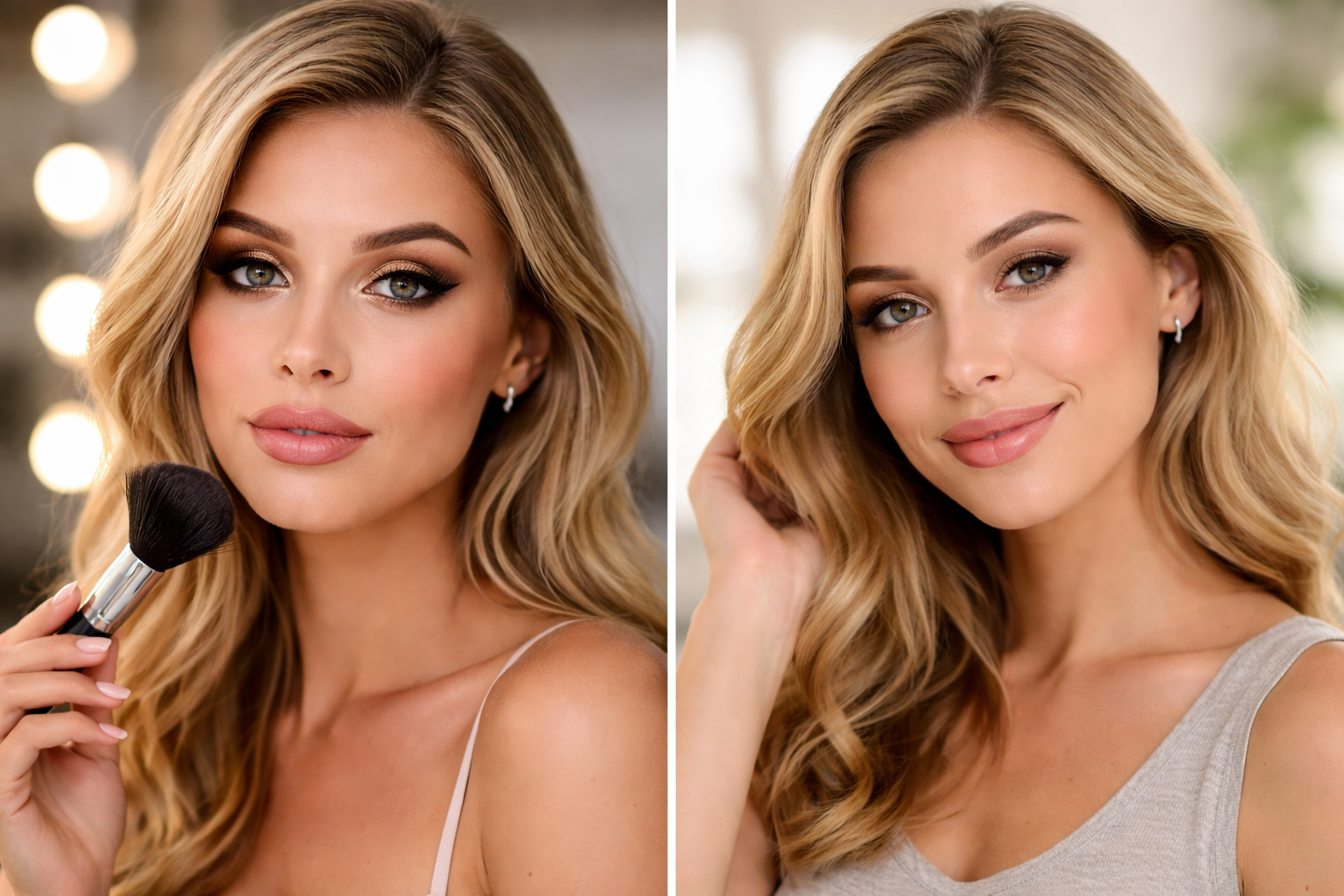
Makeup is never just about color. It is about light, texture, distance, and perception. One of the most common frustrations people experience is applying makeup that looks flawless in the mirror, only to find it appears flat, shiny, or overly dramatic in photographs. The opposite can also happen: makeup that looks perfect in photos may appear heavy or artificial in real life. Understanding why this difference exists helps you choose the right approach for the occasion.
Why the Camera Changes Everything
Human vision and camera lenses do not perceive faces the same way. Our eyes naturally adjust to lighting, depth, and subtle color transitions. Cameras, however, flatten dimensions and amplify certain elements.
Key differences include:
-
Lighting intensity: Flash and studio lighting wash out color and soften contrast.
-
Lens compression: Cameras reduce depth, making contouring and dimension less visible.
-
High resolution: Modern cameras capture fine texture, highlighting pores and product buildup.
-
White balance shifts: Colors may appear cooler or warmer than they do in person.
Because of these factors, makeup designed for photography often needs stronger definition to compensate for what the lens removes.
Makeup for Real Life: Soft Dimension and Movement
Everyday makeup is viewed at close range, under changing lighting conditions. People see you from different angles and distances. Natural movement, skin texture, and facial expressions are part of the overall impression.
Real-life makeup typically focuses on:
-
Skin-like foundation with moderate coverage
-
Cream or lightly blended contour
-
Subtle blush tones
-
Soft eyeliner definition
-
Balanced lip color
In real life, heavy contour can look harsh. Overly matte foundation may appear dry. Excessive highlighter can emphasize texture. The goal is harmony, not exaggeration.
Products that mimic natural skin—light-reflective foundations, cream blushes, satin finishes—often look the most flattering face-to-face.
Makeup for Photos: Amplified Structure and Contrast
On camera, subtlety disappears. Contour that looks dramatic in person may appear perfectly balanced in photos. Blush often fades under flash. Lip color can lose vibrancy.
Photographic makeup usually requires:
-
Slightly heavier foundation for even tone
-
Stronger contour to restore facial dimension
-
More pronounced blush placement
-
Defined brows
-
Sharper eyeliner
-
Matte finishes to reduce shine
Flash photography, in particular, reflects off oily or luminous products. This is why photo-ready makeup often leans matte. Shine that looks healthy in person can become distracting glare on camera.
Texture and Flashback
One of the most noticeable differences between camera and real-life makeup is “flashback.” Some powders, especially those containing silica or SPF ingredients, reflect flash strongly and create a white cast in photos.
To prevent this:
-
Avoid high-SPF foundations in flash photography.
-
Test powders under flash before events.
-
Use finely milled, non-reflective setting products.
In daily life, however, these same products may look completely normal.
Color Intensity and Saturation
Cameras reduce color intensity, especially in bright light. A blush that looks bold in the mirror may appear faint in pictures.
For photography:
-
Choose slightly deeper blush and lip shades.
-
Add more definition around the eyes.
-
Avoid overly pale lip colors that can blend into skin under flash.
For real life:
-
Keep color balanced and build gradually.
-
Blend thoroughly to avoid harsh transitions.
Lighting Matters More Than Product
Daylight, indoor warm lighting, fluorescent office lights, and studio flash all affect makeup differently. The same face can look completely transformed under each condition.
If your primary goal is social media photos or professional photography, apply makeup in similar lighting to the event. If your focus is everyday wear, check your look in natural daylight before leaving home.
Choosing Your Style
Instead of thinking in extremes, consider your purpose:
-
Daily errands and work meetings: natural definition
-
Evening events with photography: slightly intensified contour and eye definition
-
Professional shoots: strategic contour, matte finish, camera-tested products
You can also adapt one look into another. For example, start with a real-life base and add deeper contour and stronger lip color if you know photos will be taken later.
Confidence Over Perfection
The biggest difference between photo makeup and real-life makeup is not only technical—it is psychological. In person, warmth, expressions, and movement create impact beyond cosmetic detail. In photographs, stillness shifts attention to contrast and symmetry.
Neither style is superior. They simply serve different purposes.
Understanding how cameras interpret light and structure allows you to control your presentation instead of being surprised by it. Whether you prefer a barely-there glow or sculpted definition, the key is intentional application.
Makeup is a tool of expression. When you understand how it behaves both in front of a lens and in everyday life, you gain the freedom to adjust your look without compromising authenticity.